Showing posts with label Post thoughts. Show all posts

24 April 2022

Post Thoughts: Dying Light 2

Somehow, they will work the entire title (with the exception of the "2") into the final speech by the bad guy at the end...

I've sunk hundreds of hours into Techland's zombie series. Somehow, they have single-handedly defined (and effectively carved out) The first person, physical combat, zombie-killing genre... starting with Dead island and DI: Riptide, and culminating with their refinement of the genre in the release of Dying Light where they added the parkour mechanics that really took the genre to the next level. 

Spoiling the conclusion of my thoughts after playing the game, up-front: Dying Light 2 is what Dead Island: Riptide was to the first game.

So, let's see what I think about the game. As usual: there WILL be spoilers ahead...

30 October 2021

Post Thoughts: PC Gaming Simulator


A couple of weekends ago, PC Building Simulator was offered for free on the EPIC Games Store. I was intrigued enough to check it out but wasn't super interested in it other than to satisfy that curiosity. The first thing to note is that this game's name is terrible!! It only partially describes what the game is about and, at least for me, led me to the wrong conclusion.

So let's take a look at what I liked and didn't like about this title. As usual: here be spoilers!

15 November 2020

Post Thoughs: Ghost of Tsushima...


While I've played a few of Sucker Punch's previous releases, I was never 100% a fan of their mechanics and action - they were always a bit middle-of-the-road and pedestrian in their content despite being well-made pieces of gaming art. Ghost of Tsushima is bold in practically every way that matters; from the mis en scene introduction and colourfully vibrant environment to the unforgiving but empowering combat system. I've been loving this game almost all the way through, with only minor niggles. With that spoiler out of the way, let's dig into this...

As usual reader beware - thar be spoilers ahead!

4 October 2019

Post Thoughts: The Occupation...

A suitably ambiguous title...

Let me tell you a secret - I'm an old man. Okay, maybe that's a little fatalistic and partly an exaggeration. However, I am old enough to have been alive during the infancy of the modern style of immersive sim, though I didn't play them until 2002-2003 and I never actually played the original System Shock. There is something that resonates within me for games that create a world and let you explore and inhabit it, just as I love exploring the nooks and crannies of open world games - looking for the next beautiful or wondrous sight or hidden easter egg or quirky story.

The last ten years has been (what some have been reffering to as) a renaissance in the genre of immersive sim and while the initial installments were well-received and sold well, the latter half of the decaed saw lower overall sales numbers, leading many people to wonder if the immersive sim was in trouble:

  • Deus Ex: Human Revolution (2011)
  • Dishonored (2012)
  • Metal Gear Solid V: The Phantom Pain (2015)
  • Dishonored 2 (2016)
  • Deus Ex: Mankind Divided (2016)
  • Hitman (2016)
  • Prey (2017)
  • Hitman 2 (2018)
  • The Occupation (2019)
Incidentally, I'm writing an analysis of why this might be but that's going to take a while.

I played White Paper Games' previous release, Ether One, and loved that - though it was quite buggy, even after a few patches. I didn't directly pay for that game as I got it through PS+ and since I quit PS+ I never managed to actually get to the final ending. It's clear that the developers have improved the engine and their knowledge of the systems they are releasing on and, quite frankly, despite its much more complex design, The Occupation is in a much better state after patching than Ether One was.

If you skip the story section, the spoilers are pretty limited here since I'm actually going to focus mostly on the mechanics but... just in case: BEWARE - here be spoilers!

29 September 2019

Post Thoughts: Titanfall 2... (Part 2)

In the game as-designed, the space fold weapon has blown up this planet's moon. This is such a crazy and dangerous thing to do to the planet you are on... I have to believe that the writers/designers have no idea how this type of event would affect the planet.

While I do think Titanfall 2 is a very flawed game, I don't think it's a write-off. There are many good elements that can be used and tweaked to improve both the story and gameplay. For my thoughts on the game, see Part 1. Now, onto how I'd "fix" the game...


27 September 2019

Post Thoughts: TitanFall 2... (Part 1)

... and we all roll over and one falls out.

Back when Titanfall 2 launched, I heard a lot of good feedback about its singleplayer storyline - not just from critics but also from the playerbase as well. This was a welcome departure from the first installment which tied its storyline to the multiplayer matches and thus had to build the pieces semi-dynamically. I originally wrote most of this review back in January of 2018 but then replayed it recently in order to finish the review and see if the negative emotions caused by a (then recent) break-up affected my perception of the game... so if the review reads a bit more negatively than per usual, that's why. However, that only applies to the similies, metaphors and general text, not what I'm speaking about (I've made sure of this in my re-review). Good sci-fi is still lacking in gaming (in my opinion) so I thought I'd check out Titanfall 2 and see what all the fuss was about. This is what I think about the game...

As usual - thar be spoilers!

28 August 2019

Post Thoughts: Rebel Galaxy Outlaw


I was a huge fan of Wing Commander: Privateer when it came out. Back then, space flight sims were quite common and very popular but the star of the space sim very quickly faded into a niche with the rise of the first person shooter. Rebel Galaxy Outlaw is a call-back and directly inspired by Privateer, replicating and updating most of the gameplay systems whilst adding some new aspects. Let's take a look!

Though the game is not super heavily story-based - here be spoilers!


15 August 2016

Post Thoughts: Fallout 4...

Seems I didn't take a screenshot of the Red Rocket gas station menu - so here's a wallpaper I made instead...

Fallout 4 is an enjoyable game. I can safely say that if you liked Oblivion, Skyrim and Fallout 3 then you are almost bound to like Fallout 4. The changes it makes from the previous games are almost certainly for the better and fit this game world well enough. Whether Fallout 4 is a good Fallout game is a different question entirely and one I do not intend to answer given that I liked both styles presented by the original two Fallouts and the latter two by Bethesda.

I will, however, give this comparison:

Fallout 1&2 are to Fallout 3&4 as The Office (UK) is to The Office (US). Both have their own strengths and weaknesses, both have their own style of comedy and overarching themes but they are distinctly different experiences for the consumer.

14 August 2016

Post Thoughts: Firewatch...

Finally, a game about relaxing in front of a fire...


The indie game scene has been really ramping up in both quality and ease of access over the last few years. From my own observation it seems that there are two predominant genres: 1) the hyper-reflexive bullet hell-style retro challenge and 2) the reflective and often critical experiential games - the ostensibly purported 'walking simulator'.* This is going to be about the second of those two genres.

I just finished playing through Firewatch (as the above image and article title might indicate) and I thought I'd wrap up my thoughts on the game - as usual: thar be spoilers!

26 April 2016

Post Thoughts: Just Cause 3...


This was a really cool title splash screen and sets the tone of 'cool' for the rest of the game...

I never played the original Just Cause though I can extrapolate what sort of a game it was and whether I would have enjoyed it or not from JC2 and JC3. I think I would have. Just Cause 2 was a really fun game in the vein of Saint's Row (but more P.C.) and at the time, the grappling hook gameplay innovation was something really special and added a tonne to the way gameplay felt. Just Cause 3 is another iteration on the original concepts of Just Cause - a big open game world and a new gameplay mechanic added to the mix. 

I'll tell you up front that I enjoyed the game but felt that it overstayed its welcome more so than JC2 did.

As usual: Thar be spoilers!

30 January 2016

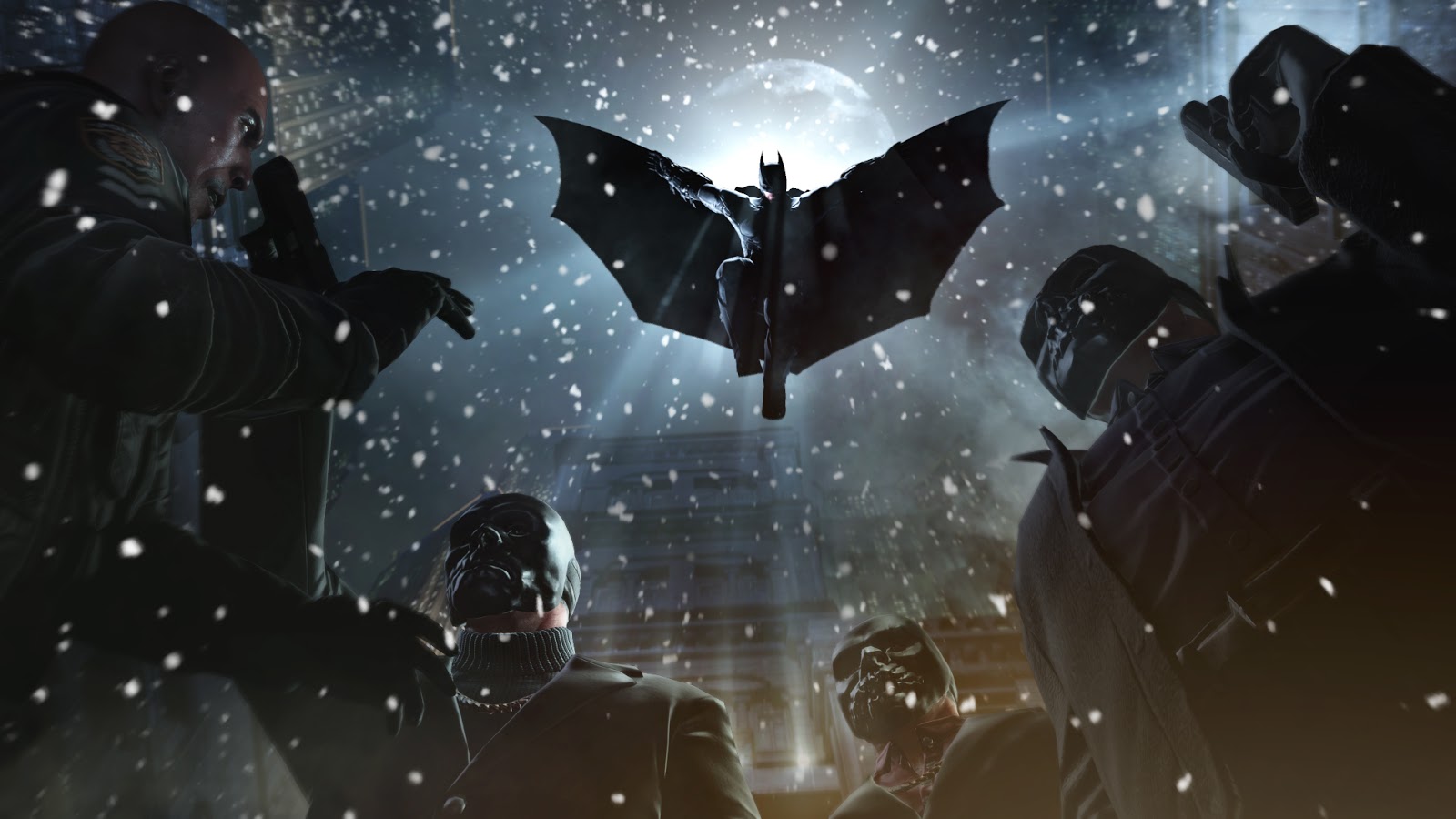
Post Thoughts: Batman: Arkham Origins

This post was mostly originally written towards the end of November 2013 right after my "Is Batman the best videogame superhero?" (Answer: Of course he is!) I'd say about 70% was finished during that period and the last 30% was finished during a replay of the game finishing right now.

I'm a fan of superheroes in general but, as I said in my last post, I don't think they're represented all that well in the games arena. However, in 2009, Rocksteady released Arkham Asylum - a game that pretty much came out of the blue for most gamers and which encapsulated the feeling of "being Batman".

Arkham Origins is the second sequel in the series and the first not helmed by Rocksteady.

As usual - thar be spoilers!

Introducing...


2 January 2016

Post thoughts: Until Dawn

Or the end...

I have to admit, I'm a bit of a sucker for choose-your-own-adventure style books like Fighting Fantasy or SMBC's Nerd comedy and the few games that delve into this sort of entertainment are quite rare.  Indigo Prophecy, Heavy Rain and Telltale's The Walking Dead series are high on the list of "variable storytelling" experiences. However, outside of those, the space is rather barren for high quality titles. Luckily Until Dawn is here to fill the gap.

As usual: here be spoilers!!


10 October 2015

Post Thoughts: Grow Home

Grow Home has been a surprise to me. It's an indie (sort-of-though-not-really) produced title from Ubisoft with minimalist graphics and gameplay. However, this simple combination is very effective and serves to evoke pleasant memories of other games I've played. Part Super Mario, part Minecraft and part Pikmin, Grow Home tugs on all the right emotional centres in my brain...


22 July 2015

Post Thoughts: Arkham Knight


I don't really think there's much to say to introduce one of the biggest and most successful game series in recent years. Arkham Knight was developed by the original team behind Arkham Asylum and City but not Origins. Some people decry Origins and City as being inferior to Asylum and I think they're right if you take it only from one perspective: Asylum was a very limited experience and as such provided a very self-contained and explanatory story and environment which an open-world game can not hope to achieve (at least not without significant investment and even larger teams of developers).

Think of it like this: Half Life 2 provides a certain kind of experience compared to Morrowind or GTA San Andreas. Knight exhibits this same behaviour when compared to Asylum - the world and experience is a little stretched and strained but it's still a fantastic game and story and I think that's the take-away message that'll bear out below.

What ya' gonna' do when he comes for you?

10 May 2015

Post Thoughts: Dragon's Dogma + Dark Arisen

It's difficult to know where to begin with this Post Thoughts; I've been playing Dragon's Dogma and Dark Arisen on and off since 2012. It's a fantastic game and there's so much there, much like when trying to talk about an Elder Scrolls game, that I'm bound to mix things up, miss details out and worst of all not do the game justice. As always, spoilers ahead...

Scale is not something that this game shies away from - not only in the architecture but also for the enemies as well...

31 January 2014

Post Thoughts: Metro 2033

I finished my playthrough of Metro 2033 today and had to write up my thoughts ASAP lest it be forgotten along with a few other 'Post Thoughts' posts I've got lined up in draft form back here in the editing room. As usual - spoilers from here on out!

Story:


Don't you just love industrial decay?

Being based on a book series the story and backstory in Metro is pretty fleshed out. In fact I think that the overall story in the game, though told in a very straightforward and simplistic manner, is perfectly suitable for consumption and I would class it on the level of a Hollywood summer blockbuster in terms of quality and intricacy. 

There's not really much to discuss about the story in and of itself as it is so simplistic and an almost classic "Hero's journey" - you set out on a journey through a call to arms by a mentor figure, overcome several obstacles, receive secret information and then achieve the final goal depending on how you, the player, ultimately decide things should play out.

The morality system (which I'll discuss below in the mechanics section) gives the possibility of two endings. However, only one of the endings is considered canonical as the sequel follows on from this: the 'bad' ending. Strangely though, it's easier to get more positive moral points than negative and, as such, just being a bit curious throughout the game will net you the 'good' ending, which I quite liked as that last scene gives you some agency in the decision. I think it's a bit strange that the canonical ending is opposed to the one that I would imagine most players experienced.

As for agency, well, despite having that morality system in place, the player doesn't get much agency at all. In fact there are many plot progression points that require NPC intervention and also many fire fights that will result in the same way whether the player participates or not. This is disappointing and confusing for the player because the design is very inconsistent on these two points and I don't remember a single instance of the current requirement being communicated to you.


"This time, I'll open it for you. Next time? Maybe I expect YOU to open it for me!"

An example of this is when you're with a group of NPCs that you're working with to travel through some tunnels. You proceed through several encounters whereby it doesn't make sense for the player to even shoot any bullets as all the enemies will be taken care of in a scripted manner (either that or the NPCs are invulnerable), but then the next encounter all of your comrades can be overwhelmed and killed... then, directly following that encounter, despite you being out in front, spotting the next single enemy first and shooting it enough to kill it, the script says that it has to dramatically pounce on one of your companions and kill him. It's a real mish-mash of player agency and I feel it really damages the game because of this inconsistency.

Other times you're waiting for NPCs to help you out of situations but then very rarely (and it is the exception) the player is expected to do something with no prompting (like shoot out a beam blocking a door that had magically closed itself as you approached)...

Characters:


The character acting is the weakest part of the game - I think mainly because I would consider Metro a double A (AA) game rather than a triple A (AAA) title. Artyom doesn't speak except in the interludes between levels - which I actually think is a nice touch and allows the player to get into the head of the character they're playing - and the dialogues, motivations and lives of the other characters are largely opaque. That's not necessarily a bad thing as, travelling to a new place for a few hours won't get you that in real life either and it may be entirely on purpose to give the player a sense of being on a rollercoaster towards whatever end will occur and having no way to change the events that will occur... which actually makes the 'bad' ending make much more sense.


This guy is still trying to contact people out in the wastes! How many years has it been?

The game world is also pretty heavily fleshed-out, with the stations having a good amount of logic and character laid onto them. You see actual families, (children, women) authority and clerk-type figures as well as food production, bartering and political systems that would be needed to sustain some semblance of a society in this situation. A lot of love went into filling the spaces of the stations out and it shows.

Mechanics:


Metro 2033 has a lot of interesting design decisions in this area. The first is having the 'old world' bullets as currency is very interesting - they're also more powerful than the reconditioned ammo that the denizens of the metro stations make in their stead. Though, I have to say that I never really noticed much difference in practise... However, that might be due to the second interesting design decision: difficulty settings.

The difficulty settings are rather strange in this game - there are three normal style difficulties, with a twist, and two 'Ranger' difficulty settings.

The normal difficulties decrease the amounts of consumables in the game (i.e. bullets and filters) but also increase the amount of damage that everyone does. So, interestingly, easy might provide you with lots of ammo and let you take a lot of damage but then, so too, do the enemies. Normal and Hardcore then switch the settings around making you more vulnerable to damage whilst increasing the enemies'. The Ranger settings are completely different in game style - these make damage output very high but make everyone very fragile whilst also increasing enemy alertness and reducing the amount of consumables in the game compared to the equivalent normal setting.

I played on the Ranger Easy setting for this playthrough and found it mostly at about the right level of difficulty and gameplay preference.

Back to that 'bullets as currency' thing. It's an interesting concept but one that probably on the face of things doesn't hold up to thoughtful scrutiny. First off, there's a lot of fighting going on down in those metro tunnels. I highly doubt that using good ammo as currency would last for very long before being replaced by something else. Secondly, there really isn't a lot of reconditioned ammunition in the game. Yes, you can buy a lot from vendors but otherwise you don't pick up that much and I would think that the ratio would be much higher than it was for me. Overall, it doesn't really affect the game that much on the difficulty I chose to play on - it might on the normal difficulties due to enemies being bullet sponges

Next up is the gas mask and filters. There are areas of the game where the air is toxic (such as on the surface) and, putting aside the fact that this doesn't really make much sense as air mixes and the metro stations and tunnels are not and could not be sealed, the player must put on their gas mask lest they suffocate and die (well, it may not be suffocation but the player hears noises that are exactly like someone suffocating in a lack of oxygen so...). The gas mask muffles sounds, increases the loudness of the players laboured breathing and requires an active filter to work. Now, filters run out and need to be replaced. You can replace them manually but there's no reason to do so since Artyom will replace them when they are really necessary himself. 

The time limit on a filter is fairly short and it seems like (though I wouldn't bet on it because of the situations this would occur under) the filters are used up faster if your activity is higher - like when you are sprinting. The annoying thing is that the game has lots of Half Life 2-esque cutscenes whereby the player is trapped but wherein the countdown timer for the current filter is still going. Even more annoying were the bugs associated with filter use that I encountered on the current Steam version of the game (outlined in the Bugs section) and the fact that these short time limits never seemed to bother the other characters in the world!! So it was one of those do as I say and not as I do things that developers seem to love so much that scream of inconsistency in the game logic.

The gas masks themselves could be damaged and needed to be replaced - no longer protecting you from the harmful effects of the atmosphere. This was a good mechanic and, as long as you didn't hit an enemy wearing a gas mask in the fact and damage it you could retrieve it for yourself (as well as finding spares around the environment from time to time). The problem with this was, if you had hit the person in the head and damaged the gas mask, the filter was automatically damaged as well and, not only that, even if you didn't hit them in the face, the attached filter did not count as usable anyway. This led to several frustrating situations where I was having to restart the section of a chapter due to being unable to get a new gas mask filter.

The final mechanic was the overall removal of the traditional HUD. I liked this a lot but ultimately it was mostly useless. The first thing was that the players watch provided them with a time-frame for how long their filter would last, however, what this did was harm the player during the times when they had to switch out filters during an encounter and then had to wait out this un-interruptible sequence whereby you re-set your watch timer. I consistently thought during those moments, "I'm in a god-damned firefight - SO WHY THE HELL DO I CARE HOW MUCH TIME MY FILTER HAS REMAINING IF I CAN BE SHOT DEAD RIGHT THIS SECOND?!!". 


"What the-?" Sometimes a HUD is a useful thing!! Also, turn around once in a while!

Ahem.

Secondly, I found it a bit indecipherable and noticed no difference to the timer setting when putting in a partially used filter and a brand new one. Combined with the automatic changing of filters, this mechanic really didn't add anything to the game at all.

The other elements of this mechanic were the electric charge and the ammo amount in your clip. You had a personal charging device that you needed to flick out every now and again to see how much you had left and recharge it by furiously clicking on the mouse button. I liked that a lot as it was 'realistic' in the sense that you had this consumable that you had to manage and it encompassed things from your flashlight to your night vision goggles.

The ammo amount was less consistently handled and, for modes where the HUD is removed completely (Ranger Hardcore) I think it's quite difficult since there were no animations or ability for the player to manually check the clips on any of the weapons. For the metro-constructed weapons, they very often had open clips that had easy visibility but for the old-world weapons, most of their ammo was out of sight of the player, leaving you at the mercy of the bullet indicator in the HUD. I think that, ultimately, leaving the ammunition count HUD active was the right choice in the absence of a real system for monitoring your remaining reserves. Though, in a future game I would like to see this design principle taken to its end-point.

Technical issues/bugs:


The game was pretty bug-free though I don't know whether the following is truly a bug or just bad design:
Whenever I was using the gas mask the number of spare filters was constantly reduced (not through use - haha) but from dying and restarting from the last checkpoint again. I would find my filter amount not reset with the rest of my ammo and consumables. This made those sections that required the gas mask incredibly tricky in some instances because constant retrying would leave me with only one filter and the only other option was to quit the game and restart the whole section to get those filters back.

This 'bug' was only made worse by the way the game was designed in many areas whereby the correct way to proceed was not particularly clear and the player had to rely on trial and error.

Conclusion:


It'll all be alright in the end... A feeling of hope despite all the grim-dark reality we've experienced through the game.


I feel a bit conflicted over this game. Did I like it or not? I'm honestly not sure and it's not often I find myself in this sort of absence of overall opinion. I think the game has merits, that it's flawed and that the developers put a lot of effort of bringing the world of Metro 2033 to life in the game. I also found it to be very frustrating in parts, due to poor design and/or bugs. It was definitely worth playing through to its conclusion and I'll be certain to pick up the sequel at some point and have a bash at that. So I guess this is a tentative recommendation.

Backseat Designing:


The first thing I would do is alter the gas mask mechanic completely. I fully understand what the developers were going for: to instil a sense of danger and urgency into the outside world and to force 'interesting' choices on the player for how they interacted with those enemies they met in the overworld. However, combined with the bug I mentioned above and the propensity of the developers to have long-winded in-game cutscenes that did not stop the timer on the gas mask usage (I died in a few of them!) the mechanics just aren't fun and, IMO don't really work all that well.

My change would be to make the gas mask filters last much longer and also their timer would be suspended during cutscenes wherein the player is unable to progress naturally (since they are being artificially held in place anyway). We're talking about something of the order of a whole outside mission can be sustained on one filter... However, I would make the gas mask much more claustrophobic. It's one of the defining things that people who have had to wear those types of gas masks say about them - your perception is severely limited. So this would require having a large in game FOV, providing the player with a much better sense of their surroundings when not wearing the gas mask. Having worked in industries that use masks with filters (though not specifically a gas mask like the one they use in the game) I can also attest to this feeling of losing a portion of your senses - at least where it pertains to vision, as I never had my ears covered the sound was fine. What I would also add is that they are very heavy - those filters on the front really weigh down your head/neck and unbalance it to an unnatural degree. So, adding to the increase in length of time, I would also make it so that turning of the camera/player's head takes longer and has more of a momentum to it, making you less accurate in aiming. 
The developers already have an instance similar to this in the game when you choose to help a young boy get back to his station/family.


That kid's heavy but not as bad as the stupid filter system!

The second thing I would change is the ending. Take out that choice at the end, take out the morality system but leave in the decisions anyway since they make the game world a more interesting place. Instead I would have the positive ending in place, with the dark one saying it wants peace, but with Artyom unable to act in time to stop the act of war from occurring due to the mental struggle he's had with the dark one. Coming to the realisation that the wrong thing is about to happen because of your actions and being unable to stop it through the actions and struggles of the person/entity trying to stop you is a more powerful ending than either current finale offers.

17 September 2013

Post thoughts: Dead Space 2

I’m actually – perhaps surprisingly – a fan of Dead Space. I felt it was mostly a great game that was very enjoyable and had very few things that detracted from the experience (I’m looking at you, asteroid section!). So why did I hold off on Dead Space 2 for so long? It’s been sitting in my Steam inventory for at least a year now. Having played it recently, I’m not sure why either! Maybe it was reports of EA tinkering with what made the first one work (i.e. the progression mechanics vis á vis what items you can obtain) or whatever... maybe it was just that I wasn’t in the mood for an atmospheric “scary” game. Who knows! As it turns out, it’s good! (See below)

As always: spoilers!

It's dark (relatively) in space...


Story:


Dead Space 2 isn’t particularly complicated. I do feel that the opening could spend a little more time explaining what’s going on and who you are for players who didn’t go through the first entry in the series but I guess that’s we can’t all be “Aliens”. Speaking of which, this game benefits from cribbing from that story a lot. Okay, the main plot elements – Ripley’s daughter/abandonment issues, marine rescue force, androids (do we hate them?) – are not present but the general story beats match up almost exactly. 

If I think about it too hard, I kind of wish they had cribbed a little more from Aliens’ answer sheet because there are some missed opportunities here where explanation would have been useful to those new players who weren’t familiar with certain characters and story elements. The section on the Ishimura especially was very eerie for me because of the first game but if I didn’t have the idea of what the planetbreaker was like in my head it would have been inseparable as an experience as the rest of the generic “space station” that the game is set on.

Similarly, there was no “normal” experience of the station for the player like there is in Aliens so there’s no way for them to frame the experiences of the game’s action and I think this diminishes the potential impact of the story and setting somewhat.

I felt that the focus of the story on Isaac’s coming to terms with the loss of his wife was very well done. The hints given through Nolan Stross' dialogue and the internal conversations with the apparition of Isaac’s wife set up the pay-off quite nicely... as well as the twist. Interestingly, there was not just one twist in this game but at least two or three. The first was your betrayal by the Unitologists – a nice little piece that began with a cutscene capture (annoying!) but luckily ended with you being free once more (very refreshing!). The second was Nolan Stross finally going crazy. Maybe some people had seen this event coming but I was unsure as to which direction Nolan Stross' story would go. He seemed like he might have been killed by one of the monsters or by Ellie Langford... or even kill himself like Isaac almost did a few times.

There were three things that I didn’t really understand or, perhaps appreciate, in the game. Ellie and Isaac – despite spending no real time or conversation together – ended up being really “pally”. The second was how Nolan Stross knew what Isaac was seeing in his visions and the key to “activating” the giant marker when it was clear that Nolan Stross had his own separate mental demons to excise. The third was why Nolan Stross wasn’t needed to activate the giant marker like Isaac was, especially since apparently they both built it and the creator has to be assimilated into the unity to fully reach activation/release (whatever sinister event that would result in!).


Characters:


We all stand together! *Bum Bum*

The space station itself is largely forgettable as a piece of the game world with, I felt, one exception: The Unity Cathedral. The architecture and design in this space was really interesting and a very fresh experience compared to the utilitarian nature of the rest of the environments that Isaac has to navigate. It was also quite scary to read/hear about how far the Unity church movement had infiltrated every aspect of human society – creepier when you think how closely something like this resembles certain “sci-fi” cults. What is interesting to me is that, despite being functional from a level design perspective, the game world also appears lived-in; with apartments and living areas, recreational and shopping areas. It’s a fully encapsulated world that the player gets a chance to explore – along with the requisite engineering back ways and ducts that the common person would not get a chance to see.

Isaac himself is a pretty good character. In both games the player learns something about him and the forces that drive him. We also see him grow as a character emotionally and through experience. Dead Space 1 was Isaac coming to terms with the loss whereas Dead Space 2 was the resolution of him accepting the loss. As a character he also straddles that difficult line between being a silent protagonist or a character we play: Isaac doesn’t talk too much but neither does he just acquiesce to every request, demand or threat. I think the writers have done a good job of giving him just enough personality and the right responses so that the audience will be in the same headspace as the character at the right moment when he does issue an opinion.
Daina Le Guin (the first woman you talk to) is a great echo of Isaac’s wife: she’s soft and cooing to the freshly-woken and confused player and (I didn’t see it coming, okay?!) the betrayal makes a mockery of that mask she wore to achieve the Unity’s goals.

Similarly, in contrast to Daina, Ellie Langford is instantly aggressive and tough but softens up very quickly. I don’t know if it was the purpose of these two characters to mimic or reflect the schizophrenic nature of Isaac’s wife’s apparition but this might be an unconscious theme running throughout the game... and I’m not really sure what that says.

Ellie isn’t really written all that well – at least as character arcs go. She’s very distrusting of Nolan Stross but somehow lets him get the jump on her multiple times, even losing her eye on the final occasion, despite her saying she’ll shoot him if he acts too erratically and her previously being shown as very capable with regards to survival and combat. Her switch of personality also extends to her interactions with Isaac as well and, though it fits in with the beats of the story, there’s little reason for her to care so much about him as they go through no bonding process.

Tiedemann! Damn, that's hard to spell... Wait, what's your motivation again?! I mean, I haven't even really been coming "after you" the whole game. As far as I'm concerned I've just been trying to get off this damn rock!

The final character (that I can remember!) is Hans Tiedemann. While he isn’t a particularly effective foil of an adversary for Isaac, at least I remembered his name without having to resort to Wikipedia. I also think he is a little absent throughout the game’s story and that, along with his shallow motives, may be why his interferences were nothing but theatrical appearances of the dame in any Christmas pantomime. I found it very hard to connect with and understand Tiedemann's position because he never served any purpose other than dropping obstacles in the player’s way and, though his actions and motives were hinted at in voice logs and diaries, the game never really delivered on him as a character.


Mechanics:


I think this game operated on a “what ain’t broke, don’t fix it!” philosophy and I think that was the right call. The basic mechanics of shoot limbs/stomp/reward work well and didn’t need to be adjusted or messed with to make them any better.

The big, interesting changes were immediate and free access to a number of weapons and suit types and a lack of “timed events”. The first did well to accommodate different play styles through player choice with the suits having various bonuses or attributes applied to them which I thought was a very clever decision. The second was also a correct decision which reduced frustration with those particular encounters (e.g. the tentacles). While I generally enjoyed the variety these gave to the first game they could be frustrating due to the control changes necessary to create a chaotic and challenging event. It also allowed the developers to trick the player with the hallucination of the tentacle attack when returning from the Ishimura.

The upside-down horde mode section also made an appearance in this game and was brought more to my attention due to the event’s inclusion in both Tomb Raider and The Last of Us. I actually didn’t mind these particular encounters as they were quite tense and interesting to play through, though I know some people dislike them for their difficulty. It makes me wonder what the inspiration was for this sort of encounter and which game did it first; was it possibly Dead Space 2? I haven’t played another game that did this that came out before it was released.

Some other small aspects that I don't remember in the first game were the breaking-glass-to-vacuum mechanic where you have to hit the target to close the shutter before you're sucked out into the vast emptiness of space and the telekinesis module that allowed you to throw items at your attackers. 

You don't say? I thought it might cause chocolate cause it's so brown outside!

In my (very honest) opinion, I don't think that these added anything to the game and, when encountered, detracted a little from the experience. Firstly, the shutter mechanic was so rarely used that the second time I accidentally triggered it I died, not remembering what I had to do! Only once I reloaded (and failed to trigger it!) did I remember that I had to shoot the target. It was potentially interesting but not really needed.

Similarly, the telekinesis module was useful for all of ten minutes: mainly because once you got a weapon you generally were okay. Otherwise the module was problematic for moving around the ship because whatever you were wielding at the time would have clipping issues with the level geometry and, since those physics-enabled objects that were most lethal (i.e. spikes) despawned after a really short time period, there wasn't much chance to use the ability because it was just more efficient to aim and shoot with a weapon in the close confines of the station instead.


Technical issues/bugs:


I had no crashes during this game and it appeared to be very stable with no graphical glitches that I observed.

This isn’t a bug but I yearn for the days of manuals again because I encountered an issue where I was unable to stop aiming my weapon on a couple of occasions. The first time it happened the only recourse was to force-quit the game as I couldn’t save at a save point (though I could use the vending machines). The second time, frustrated, I hit the caps lock key by accident and it sorted itself out. It turns out that the key is an aim toggle – though why you’d want this is beyond me – but the game had made no mention of this (that I had seen) during the tutorial section for me to know about this functionality. If I’d had a manual I would have flicked through it to see if there was a setting that did this and discovered the answer.

I guess this is just one of those instances where it might be a good idea to have an indication of what all assigned keys/buttons do or not assign them unless the player desires the functionality to be utilised.


Conclusion:


The only game in recent history where people recover from massive trauma to the eye within seconds!! (But they can't cure a little bit of schizophrenia given years!)

Once again, I enjoyed the different pace of the Dead Space series and the relatively good self-contained story. I’m left feeling really interested in Dead Space 3 now (supposed lack of survival horror elements aside!) though I’m not really sure what else can be done with Isaac’s character now that his issues are “resolved” or that the markers and monsters are destroyed or at least neutralised. My gut feeling is that Dead Space is almost literally following the Alien quadrilogy in its trajectory; with the third instalment being a bit of a cop-out compared to the previous two but still an entertaining endeavour on its own merits and the fourth instalment being a jolly dance on the graves of the underpinning ideas of the series and irreverent silliness all around!

Prove me wrong, EA... prove me wrong. :)


Backseat Designing:


Right, time to listen to ME!

There isn’t anything that I’d change in this game, mechanically speaking, but I would love to flesh out Ellie, her relationship with Isaac and Tiedemann specifically. These two are the weakest parts of the game and I think the story would be stronger if Isaac and Ellie interacted more often within the same space (not escort quests!) and if Tiedemann did something other than drop obstacles in the player’s way for no real reason.

Story-wise, I’d also add in a section prior to your release – where you were hallucinating horrors and events from the Ishimura in the mental ward while under observation as well as seeing the marker and Isaac’s dead wife, etc. perhaps set during a transfer of patients to a new holding facility where Isaac escapes and rampages around before realising that he was just imagining everything. 

This would introduce these elements for new players as well as remind players of the first game of those events. It would also give a sense of the “normal” and bring the hallucinations more emphasis and power throughout the game by making the player question whether everything they were experiencing was real or just Isaac losing his mind.

6 September 2013

Post Thoughts: Dead Island Riptide

The title art piece isn't especially poignant or imaginative... though, like the teaser trailer for the first game, that's not necessarily indicative of the rest of the game.


Story:


Dead Island's story was an unapologetic mess - not the actual lore but the presentation of the story through the cutscenes. In Riptide, Techland have advanced the presentation of the story and as a consequence made it far, far better than the first game. However, that's still not to say that Riptide's story is any good. It's not bad, per se, but it won't be winning any awards and the logic behind some of the twists and turns is questionable. If we're all honest with ourselves, though, the story isn't why we're here... is it? Even Techland would probably admit this but I'm glad they have improved this aspect of the game to raise the overall quality of the product.

As it stands, the story is serviceable: a bog-standard, "we need to get ourselves out of this hell-hole", melodrama with overwrought caricatures splashed over a pastiche of over-saturated and exaggerated pacific island backdrops. What's good about the story and the cutscenes is that you understand what is going on and you can generally follow each plot point from one moment to the next (though there's one part where someone was "shoved" that wasn't really explained and I don't know if I missed out on some exposition before that point or not). Not only is the story coherent, it's also decently voice-acted and easily followed.

Speaking of the voice actors: I can listen to these voice actors - especially Purna - there wasn't a single instance of phoned-in VO that you tend to hear especially in RPGs (e.g. Fallout 3/Mass Effect) for the main characters and the emotions that were poured into the roles were quite refreshing to my ears, even if they bordered on the unbelievable many times. It was just nice to hear dialogue that was not blandly read straight from a script like a robot.

The game feels shorter that the first entry in the series. For some people that might be a bad thing but I think, in general, people felt that the original was padded with lots of needless travelling around the same environment. There's also a lot more fast travel points in this game which is nice and has the effect that you can move around more quickly within the same area if you so wish. I didn't keep a track of how many hours I played the game but it was above 10.


Characters:


As I said above, the characters are completely overwrought; they're stereotypes from different media - some from film, some from music and others appear to be more "local gossip" in origin. They're cheesy and lighthearted and that's why they get a bit of a pass from me. If this where a serious(TM) story and game then I'd have more of an issue with their skin deep motivations and characterisation but Riptide is not much more of a serious game than Serious Sam.

Your choice of four playable characters in the first game has been expanded to five but, since I had played the first game, I chose to continue on my gun-oriented australian ex-cop femme fatale, Purna. Each of the characters have different skillsets, which are broadly similar in scope so you don't strictly have different classes like you do in other games but they're less similar than in games like Left 4 Dead where everyone fits in the same hole. My character choice lands me with specialisation in both firearms and bladed weapons and that's a pretty good deal for me as it provides a good range of options for taking on encounters.

The remaining characters focus on bladed, unarmed, throwing and blunt weapons... and the new guy? Well, I'm not entirely sure what he does!

The island itself - another veritable character in the game - does not disappoint in comparison. Beautiful in the tropical jungles and tourist paradises and depressing in the shanty towns of the poverty-level locals. However, we had seen this mostly before in Dead Island and where the game's art direction really took a turn for the better for myself was once we headed into the town. The style and architecture that was crammed into that space was truly amazing and really has me wanting Dying Light (the follow-up game from Techland) even more in the wait until its release. It was actually interesting to traverse the alleys and roads in this place and even to visit the few story-based locations like the base and castle/fort and it provided and much-needed change in pace and environment - unlike the first game's switch to the town environment which actually felt worse than being in the resort...
Hanging balconies, metal railings, stonework walls... all set against the backdrop of a tropical island? What's not to like?!
Image courtesy of TruKilla


Mechanics:


First off, I still love the fighting mechanics and the pure physicality of the Dead Island games. This is retained perfectly in Riptide and is, IMO, the best all-round fighting system I've ever played. It's a joy to jump-kick advancing zombies to the ground and then de-limb one on the floor whilst rising to meet the charge of another wave of assailants. It's fantastic to learn how to judge weapon wind-ups and attack parameters, finally get to the Japanese blades and decapitate three infected, one after the other whilst sidestepping their attacks. The melee mechanics really do work very, very well and is, along with the exploration, the main reason why I like these games so much.

I also like how viable throwing your weapons, especially at the thugs and other "tank-like" enemies is. Doing away with all the smaller enemies around a large threat and then dealing damage to the larger threat is pretty fun - as long as your weapons are retrievable.

Firearms are dealt with in a decent manner - they're just guns and there's not much to see here except that apart from your kicking mechanic you also gain a "butt strike" when wielding a firearm. They also seem weak when you first get them and they do also take a long time to start showing up in the game, much like the first Dead Island. One thing I didn't like on the console (PS3) version for the firearm use is that it has a sticky targeting, which means that your gun will aim at the centre of the chest of the zombe you are aiming at when looking down the sights and it is very difficult to move the reticule up to the head or off to a limb without jumping off and away from the enemy entirely.

Weapon modifiers (e.g. Strong, deadly, decapitating, cripling etc.) aren't at all explained and most of them aren't obvious. It's obvious that a decaptitating or cripling weapon modifier will result in a higher percentage chance of the respective debilitation but what about the rest? It would be nice if the game explained it a bit!

They have changed the proficiency and leveling mechanic. What appears to have happened is that, despite your carried-over level from the first game, you have the same power/damage curve as was in the original from level 0. This results in stamina usage being incredibly high as it was when you were very low level in the original game but once you level up your weapon class proficiency you then are able to perform as you had previously in the original. So they have basically managed to reset the player ability through putting these proficiencies in the game.

Combined with this, the kick has had a stamina cost built into it. Reading up on this issue, I found that Techland had implemented this in the original game in an update - though I never played the game with that update. Personally, while it may make logical sense that kicking takes stamina as jumping or dodging does, the amount of stamina cost for one kick (more than swinging a weapon twice) is very high and it did reduce the fun of the mechanic and resultant gameplay early in the game.

Another way that they reset your abilities, without resetting your level, is to only provide you with low-level equipment at the beginning of the game. This is deadly and increases the difficulty exponentially because the enemies scale with your level. So, when bringing a character over from the original game, you are a level 30+ character stuck with weapons that perhaps don't even have a level requirement and since the weapons in the shops are so ridiculously priced it's impossible to even afford anything decent until you happen across something as a drop from an enemy or from an item chest.

The hit detection seems to be a bit dodgy as well. Sometimes your kick will visibly miss an opponent but make them, and other aggressors stumble backwards as if they were hit. This is fine for me since you are looking at them on the screen and you do not know where exactly the foot will make contact with because it is not situated in the centre of the screen: the game is making the (correct) assumption that you were trying to kick those enemies and helps you along a bit. Unfortunately, this only makes the inverse that much more infuriating so that when you think you should have made contact with an enemy both with your kick or with your weapon and you do not it is frustrating - especially because you will most certainly take damage in that situation.

Another mechanic which is dealt with differently in other games (such as Skyrim) is unstoppable animations. These include the head stomp and the new jump attack mechanic. In other games an unstoppable animation makes you invulnerable to enemy damage or, at least, pauses other enemies' attacks. Riptide doesn't and in so doing relegates these mechanics into uselessness. The head stomp, even when upgraded is incredibly slow, both in the wind-up and wind-down. Yes, it automatically kills any enemy on the floor (as long as the hit detection doesn't mess up!) but the thing about this is that only the weakest enemies can be knocked down - the ones that are easiest to kill and have the lowest hit points... which means that it isn't that useful as a combat shortener. Also, since you can be attacked when performing the head stomp, you should not (and really cannot) perform it when in combat with more than two or three enemies nearby as you will take a lot of damage from them - which doesn't interrupt your animation, leaving you helpless. Finally, there is another move available to you which is faster, able to be backed out of and does as much or more damage: the down/up strike.

The down/up strike (my naming) becomes available when you look down at an enemy that is lying on the floor. All's you have to do is hit the attack button once or twice and you will perform a downward swipe or a downward and then follow-up upward swipe respectively. This attack will reliably kill any weak, knockdownable enemy in those two hits. You can also still move around or dodge or interrupt the attack with a jump the same as any of your other normal weapon swipes. This attack will also hit any other enemies in front of you on the upward swipe, knocking them and interrupting their attacks and advance. This makes the head stomp a complete waste of skill point allocation (not that you can undo it from the first game if you had it anyway!) and a complete waste in the game play as well because there is never a real reason to use it. Pretty much the same can be said for the jump attack.

One good thing that this series update does is to reduce your inventory management. In the original, your inventory slot limitation covered throwables and secondary items such as alcohol and medikits. In Riptide only your melee weapons and firearms are counted and this makes the game more enjoyable as a whole as you're not constantly having to either traipse back to a shop or discard items you may want later on. The storage limit (i.e. the guy who holds onto items for you) has also been increased significantly and I never got to the point where I could test the bug that happened in the original whereby you would go over the limit and lose the items that had been put in first...

A change that is a bit peculiar is the addition of a zillion workbenches. In the original, they weren't all that common, meaning that you had to manage your weapon durability and degradation fairly carefully and it was important to have backup weapons in case of your primary weapon becoming unusable or significantly damaged. In Riptide, because there are so many workbenches and repairing items is so cheap, you realistically can get away with equipping one melee weapon and one firearm and maybe, if you want, a grenade or molotov into your quick slots. This change basically does away with the durability mechanic and makes it a non-issue... a puzzling change because in the first game it really had an impact. In Riptide I never went below 40% durability on a weapon.

However, a fantastic change is the addition, at least on the console version, two a complete quick select wheel mechanic for both your equipped slots and the select menu meaning that you can quickly switch between the map and the stats pages instead of having to manually slowly slide through the pages inbetween. In general, I love quick select wheels. I loved it in Neverwinter Nights and I never understood why more games didn't make use of them.

I'm not a big fan of the health mechanic. Your health looks like it has a lot of segments on it but any enemy can and will damage you for at least two of these. I actually don't get how it works in its entireity because strangely, some health will recover sometimes and depending on the attack but other times it does not and sometimes it will regenerate to the nearest bar and other times it will stop mid-bar and not regenerate any further. It's a bit confusing because the difference is never explained. I also dislike the tendency of developers to obscure the action the more injured you get. I dislike this purely because the more injured you get, the harder it becomes to deal with the injury. The Mass Effect series is a prime example of this mechanic and it frustrates me no end. In the same way that you don't get water droplets/steam/blood splatter on your eyes in real life, adrenaline tends to kick in when you are in danger or injured, resulting in heightened senses, faster reactions and stonger muscle tension. I realise that it can be an indication on how you're doing, health-wise, but I feel that some improvement can be made to this aspect of gaming without making it so that the more injured you are, the exponential likelihood it is that you will die.

Speaking of adrenaline, the fury mode/power is still in this game. To be honest, I never used it in the game except twice when I was forced to by the developers and once when I was trying to frantically use my med kit during a fight and I held the button down for too long. I played as Purna, IMO the best character as she gets bonuses to both blade and firearms, and her fury power is to instakill enemies with an unlimited ammo sidearm within a limited period. It's very powerful and is a fine mechanic but... to be honest I just completely forgot about the power. I did the same in the original Dead Island as well and I didn't really miss it. I think that the main problem is that the activation meter (fury meter) is so small and innocuous and doesn't really highlight itself when it's full so you just concentrate on getting along in fights and exploring the environment. For the next game (because I'm pretty sure there will be another game considering the sales chart positions that I've seen) I'd like them to make it more obvious when whatever equivalent skill is ready for use.

Like cars and trucks, boats can hold more than one person at a time as well - useful for co-op but it has no impact on the single player experience. I can imagine that the issues with kiting enemies are reduced in this scenario...
Image courtesy of Molag Bal

Transport in this game is a bit of a mystery. Automobiles (cars and trucks) have spawn points, they are decent to handle and kill zombies quite easily and at low speeds - not to mention the protection they afford the occupants. If you use an automobile it will remain in the last place you left it until you take another automobile, at which point it will disappear. At the same time, another automobile will spawn at the place you originally took this current "in-use" automobile and, finally, the automobile that is "in-use" will disappear upon exiting the game. Confusingly, this is not how boats work.

They provide faster travel on the water than walking but are not very agile and are quite slow to turn. The occupants are very vulnerable to attack from the drowned dead as these can climb aboard and you are vulnerable to attack from yet another unstoppable animation as you get off the boat (though you can choose which side you get off the boat if you nudge the movement stick in that direction). However, the most frustrating thing about boats is that boats are permanent fixtures in the game world: they stay wherever you leave them, even across play sessions, and do not respawn in their original positions. This results in you running out of water vehicles because you will undoubtedly end up with all the boats in one or two locations. Worse still, when your companions use a boat to get to another plot point they take one of the other boats from the map to do it. I ended up with three boats in one place because of this and, since the roads do not reach all places that travel by water can access, it meant that unless I specifically went out of my way to do so, I could not get rid of these "boat collections".

A whole load of water but nowhere to go...
Image courtesy of Siha

The dirty secret of boats, though, is that it is - like the head stomp - better not to use them. My reasoning is thus: Use of boats will inevitably result in kiting a line of fast-moving enemies that will damage, if not outright kill you as you dismount. Not to mention the "boat collections" I talked about above. It is generally safer to deal with the drowned dead on a one-to-one or one-to-two basis just moving through the waterways yourself.

This brings me onto my next point: the player is restricted in movement speed and ability when in water past a certain depth but zombies are not. This is doubly true for the drowned dead who are super fast but even the basic walkers are able to move at normal or very close to normal speed when in water - especially when performing their lunge-grapple. It feels unfair to have this mechanic in the game. When you're on land you suffer no such penalty and the zombies do not have such a large advantage over your movement ability.

One poorly-implemented idea are the knife-wielding walkers: They will attack you with their knives most of the time and this is fine but they also have a rarely used throw attack... which is an instakill even when you have full health. When you die like this it is very frustrating, especially because there's no wind-up animation (or it's very short) so there's virtually no way you can dodge the knife hurtling towards you.

Luckily, death is a pointless thing in this game and is of no import... but sitting at the 7 second "death screen" is annoying when you feel like you had no way of avoiding it.


Technical issues / Bugs:


When using a bladed weapon (I haven't checked the other melee weapon types) your backhand attack animation will sometimes get stuck in the "up" position, meaning that you are frantically pressing "attack" but only a weak slapping of your elbow is hitting the enemies. I don't know if this is a bug or a feature of the physical combat system in the game.

Weapon damage is a bit of a mystery. The weapons themselves have DPS values but, while for the most part they made sense and matched with what I was seeing on the screen, occasionally they would suddenly drop for no observable reason and then later on I would find them higher again. Let me give an example: I had a number of weapons all dealing around the 1700 damage per second mark but when I went back in to look at them after a while (and this was at full repair) they were dealing around 1650 or less. Later on the values crept back up again without explanation. Finally, late in the game my weapons dropped in their DPS indications but started doing much more damage than they said they could. I had a chinese war sword (awesome weapon) that was said to do 2500 or so DPS but each and every hit did 4000+ damage. If I had a critical hit, it went up to above 6000+ damage. This same scenario played out for all weapons at this point and I had no idea if it was intentional, based on level or weapon proficiency (though supposedly, when you look at the DPS values they are supposed to take these modifiers into account) or if it was just an outright bug. Either way, it was fun to be doing so much damage towards the end of the game and it added to the game's appeal for me, bug or no.

There was also another bug I encountered only once. I accidentally threw a cleaver into the ground in a safe zone and it just disappeared. Every other time I had a weapon thrown I was able to locate it (and I think they can get moved around a bit by explosions and whatnot) but this one time it just disappeared... so it's best to be careful in those places.

So that's where I put it!
Image courtesy of  |tb|JesusRaptor

They still have the save game mission completion bugs that existed in the first game. Despite the game saying it's saving, it will not always update partially completed quests and one time I had the game forget I had even started a quest in the first place. It's a minor annoyance but still quite a simple thing to fix in terms of game complexity which is why it's all the more annoying that it wasn't fixed for this sequel.

Finally, this isn't really a bug, per se, but it's incredibly funny how everyone gets an automatic and instantaneous haircut once they are decapitated... which is made all the more apparent by the game switching into slow motion! I'm not really sure why you'd want to call attention to that.


Conclusion:


I really struggled to like Dead Island Riptide at first - as I did, though not to the same extent, the original Dead Island. However, I came to enjoy the game much more in the late-game stages. Not only are there relatively fewer zombies later on in the more confined areas of the city but your power curve has levelled and become very similar to the adversaries which means that you are powerful and able to hold your own in tense situations without your enemies being over- or underpowered in comparison to your character.

Interestingly, I had the same experience with Dead Rising... which really only became enjoyable once I'd unlocked all the equipment slots and health upgrades. While I like the end result, I find that there is a lot of unnecessary work placed on the player to get to this point and, especially early on, there are many frustrating instances that can and would make a player give up and put the game down - perhaps for good!

What I think will happen in the next game is that they will use new characters. The main reason is that they were "forced" to continue on with the story from the first game because of the way it ended and they probably didn't expect it to perform so well so hadn't accounted for that scenario before it was released. What this resulted in was potentially very powerful characters that would be carried over into Riptide which would suffer a complete disparity with newly created characters in the game in terms of potency. This was averted through the introduction of the weapon proficiencies which, if my reckoning is correct, act as the new versions of character levels in this game.

Aside from a potential story reason why there will be new characters in the second sequel, there is only so much of this "depowering" that the developers can do without ridiculous numbers of layers of complexity being added to the character levels and weapon proficiencies... not to mention that the skill trees themselves simply do not really support any more skills being added.


Backseat designing:


I really feel like a fully regenerating health bar would make more sense in this game - especially since death is such a minor inconvenience. I'd keep the food and health kit items though and repurpose them. I would use the food to balance a hunger mechanic which would not kill you if you got hungry but would instead increase stamina costs for all actions as your hunger increased. The med kits I would keep for wounds like those you get in Far Cry 1 and 2. Being attacked and severely injured could have the possibility of resulting in a debilitation: For instance, you could lose the use of one of your arms, restricting which weapons you could wield... or your legs could become injured, reducing your movement speed or stopping you from being able to run or jump entirely. Maybe even include a concussion effect like in Boiling Point, which made the screen go all fuzzy for a few seconds and you could hear tinnitus over the ambient sounds.

I'd also love to include a "hardcore" survival mode. This wouldn't change the above mechanics but would instead spawn a limited number of zombies on the island, mainly concentrated around areas of noise or where people would have been congregated (such as urban centres). Zombies would not respawn and instead their positions would be tracked by the game so that you could lure enemies away from areas you wanted to get to... also the better weapons, such as firearms would be in urban centres, along with medical supplies and food caches which would make for an interesting gameplay intersection between trying to pick off individual or small groups of zombies on the outskirts/wilderness or distracting larger groups that were less manageable earlier on in the game. Since the number of zombies would be limited, victory would be established only when you'd killed them all... and player death would be permanent. So, the regenerating health system would be vital for making this aspect of the game work.

It also might be good to have other objectives in this survival mode and other possible win-scenarios... such as finding a cure, doing the leg work and research to get to the cure would force you to move out of your comfort zones, for example.


Themes:


Techland have liberally borrowed zombie types from a wide variety of media and put their own spin on them. In Riptide there is a good mix of enemies and they don't throw so many of one type of the special zombie types at you at once. Whereas in Dead Island they really threw a lot of the straitjacketed charging types at you in the city but they toned that down in the sequel and instead varied the types with additions like the Screamers and grenadiers. This change meant that there was never really a feeling that the developers were lacking imagination in a given situation by spawning so many of the same special infected type over again in short time periods.
The Screamer: Relatively easy to take care of unless they let off their eerie howl...
Image courtesy of ♠PRᶤƵ_